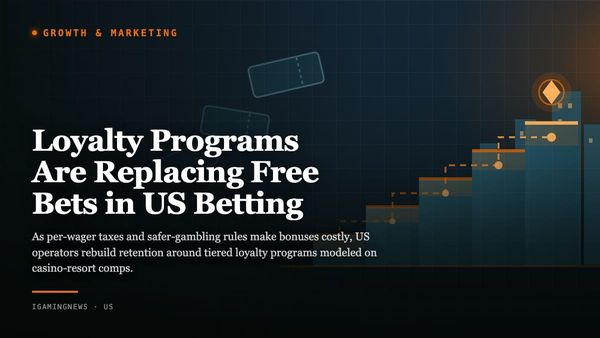
Loyalty Programs Are Replacing Free Bets in US Betting
As per-wager taxes and safer-gambling rules make bonuses costly, US operators rebuild retention around tiered loyalty programs modeled on casino-resort comps.
Acquisition, retention, and the marketing playbooks that win and keep players.
As per-wager taxes and safer-gambling rules make bonuses costly, US operators rebuild retention around tiered loyalty programs modeled on casino-resort comps.
A small cohort of high-value players still generates most online gambling revenue, and UK affordability rules now put that concentrated VIP model at risk.
A gambling advertising ban across Belgium, Italy and the Netherlands is pushing operator marketing out of mass media and into owned data and affiliate channels.
Casino gamification is increasingly funded by suppliers, not operators. Pragmatic Play's Drops & Wins shows how prize networks became a rented retention layer.
The betting affiliate model has split in two: Catena Media shrank to North America to survive, while Better Collective scaled across owned media and data.
Sportsbook promotional spending is shrinking as US per-wager taxes and 40% rates push FanDuel and DraftKings to bill bettors and end the free-bet era.
Predictive player retention is where iGaming growth budgets are moving, as rising acquisition costs and cheaper AI churn models rewrite marketing economics.
The Premier League gambling sponsorship ban hits shirt fronts from 2026-27, wiping out roughly £80m a year and rewiring how betting operators buy attention.
Gambling affiliate SEO is being rebuilt around AI as search headwinds bite. Gambling.com Group cut 25% of staff; Better Collective leans on its Playbook tool.
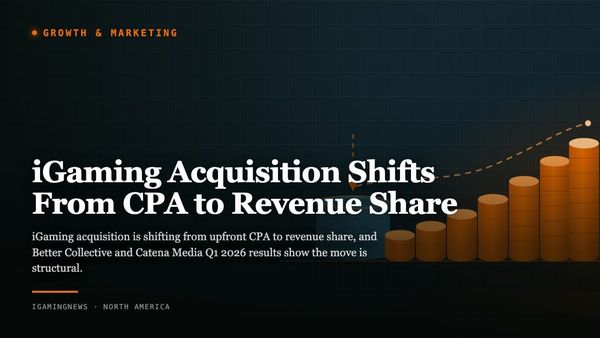
iGaming acquisition is shifting from upfront CPA to revenue share, and Better Collective and Catena Media Q1 2026 results show the move is structural.
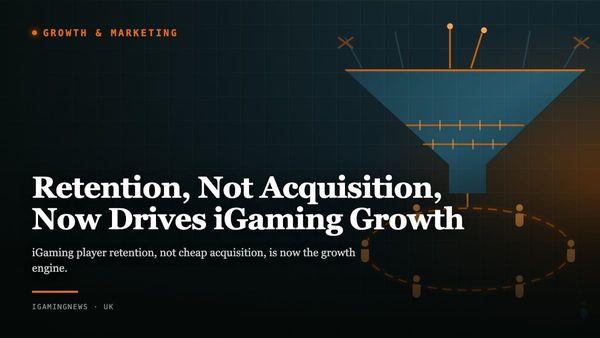
iGaming player retention, not cheap acquisition, is now the growth engine. Ad bans, affordability checks and rising costs have closed the era of buying volume.