Fortuna Entertainment Takes 70% of Lithuania's TOPsport
Fortuna Entertainment Group closed a 70% buy of TOPsport, Lithuania's leading online sports betting operator, on August 17, its first entry into the Baltics.
Market entries, exits, and the shifting competitive landscape of global iGaming.
Fortuna Entertainment Group closed a 70% buy of TOPsport, Lithuania's leading online sports betting operator, on August 17, its first entry into the Baltics.
Zitro Digital signed a slots content deal with aggregator Novusbet on August 18, its second such tie-up in six weeks after a late-July deal with REEVO.
Boot Hill Casino extended its Kansas Lottery sports wagering contract three years and its DraftKings partnership ten years, both running through 2030.
BetMGM now streams live blackjack, roulette and baccarat from MGM Grand and Bellagio in Las Vegas directly into Alberta's regulated iGaming market for players.
BetRivers Poker is one New Jersey licence away from the first five-state MSIGA poker network, as WSOP and FanDuel race for the same six liquidity states.
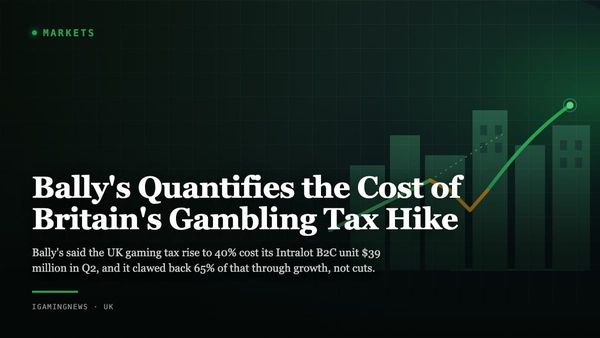
Bally's Corporation said Britain's gaming tax rise to 40% cost its Intralot B2C unit $39 million in Q2 2026, clawing back 65% through growth, not cuts.
TransAct Technologies has hired BofA Securities to review strategic options for its Casino and Gaming unit, a day after signing a new CFO severance deal.
The AGCO registered Fanatics Betting and Gaming to offer sportsbook and casino in Ontario, its first consumer gambling market outside the United States.
Evoke's H1 2026 results flag two going-concern risks tied to its Bally's Intralot takeover, against roughly £769 million of debt maturing in July 2028.
New Zealand's expression-of-interest window for 15 online casino gambling licences closes August 14, the first cut before licences are issued in early 2027.
Tabcorp signed a binding deal on August 10, 2026, to acquire wagering-tech firm BetMakers for AU$267 million, at a 45.5% premium, pending ACCC clearance.
BetMGM has expanded its Marriott Bonvoy points tie-up into Alberta, timed to the province's July iGaming launch, importing a US loyalty model into a new market.